01Problem
What was broken
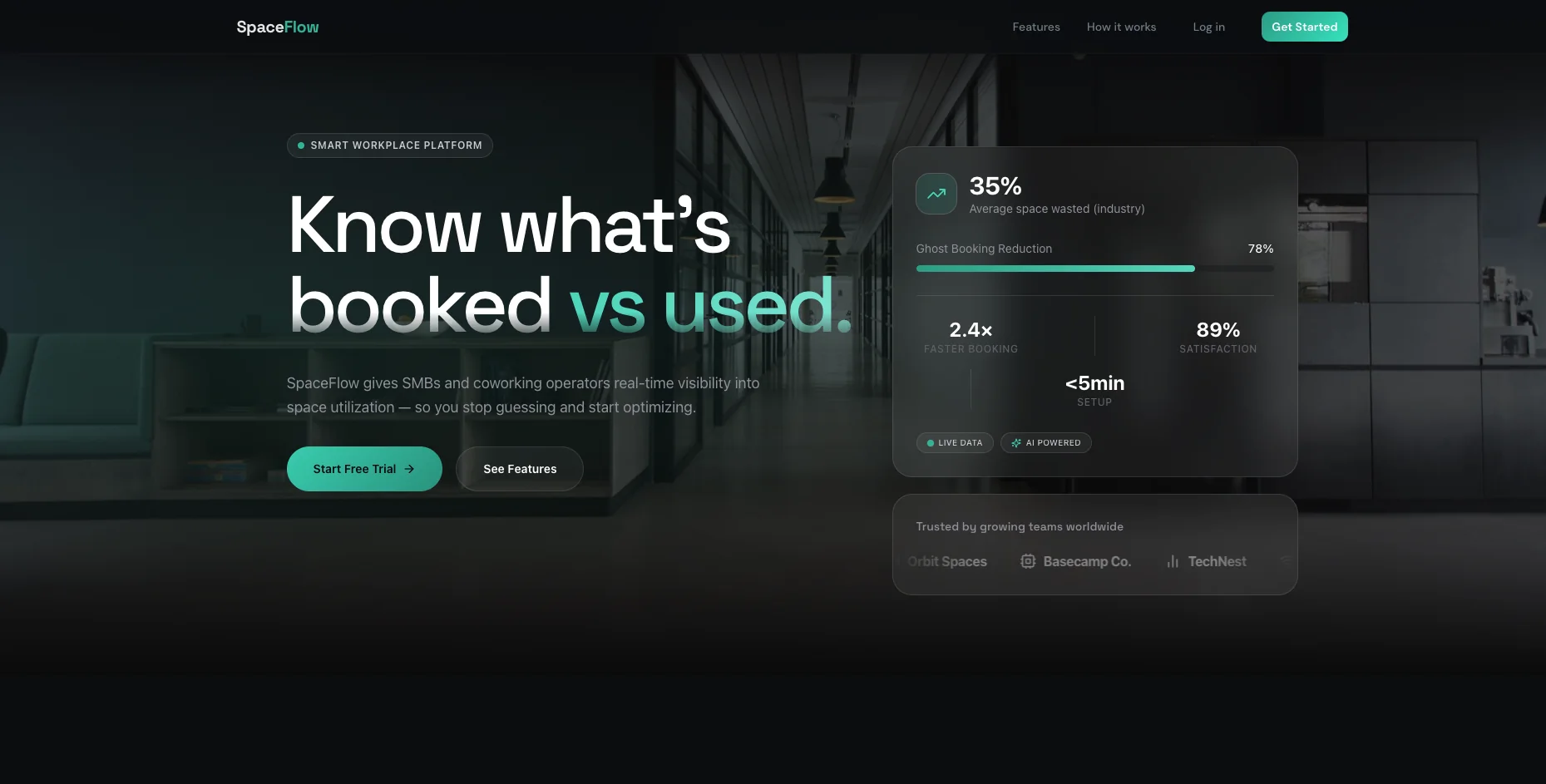
A room gets booked for a 2pm meeting and sits empty. Multiply that across a floor and the booking calendar stops matching who's actually there, so facilities teams can't tell which desks or rooms to cut.
02Impact
What it does now
Closes the gap between what's booked and what's actually used, without installing physical occupancy sensors. QR check-in plus a 15-minute no-show timeout gives facilities teams real occupancy data at a fraction of the cost of an IoT rollout.
03Architecture
How it is built
Node, Prisma and PostgreSQL handle bookings; a QR check-in state engine tracks who actually showed up. A cron job compares reservations against check-in pings and logs a no-show after a 15-minute timeout with nobody scanned in. That data feeds a dashboard an LLM summarizes for facilities managers.
Modules
- QR Resolution Engine
- Analytics Aggregator
- NLP Booking Intent
- RBAC Auth
04Intelligence
Where the AI sits
Human-in-the-loop by design. NLP handles fast natural-language scheduling, while historical booking data is evaluated by an LLM to advise facilities managers on space adjustments, never applied automatically.
05Decisions
Trade-offs I chose
- 01
Alternative to IoT Connectivity
Infrared desk sensors need an installer and a hardware budget per desk. QR check-in needs a printed code and a phone camera, so a floor can go live in a day instead of waiting on a hardware rollout.